Accuracy5 min read
How SLAB's Door Sizing Tools Improve Accuracy and Reduce Waste
A door built from last week's version of the order shows up as wasted material and a delayed delivery. Catalog-based configuration and a locked quote remove the two places that error is introduced.
Slab Team · 17 September 2026
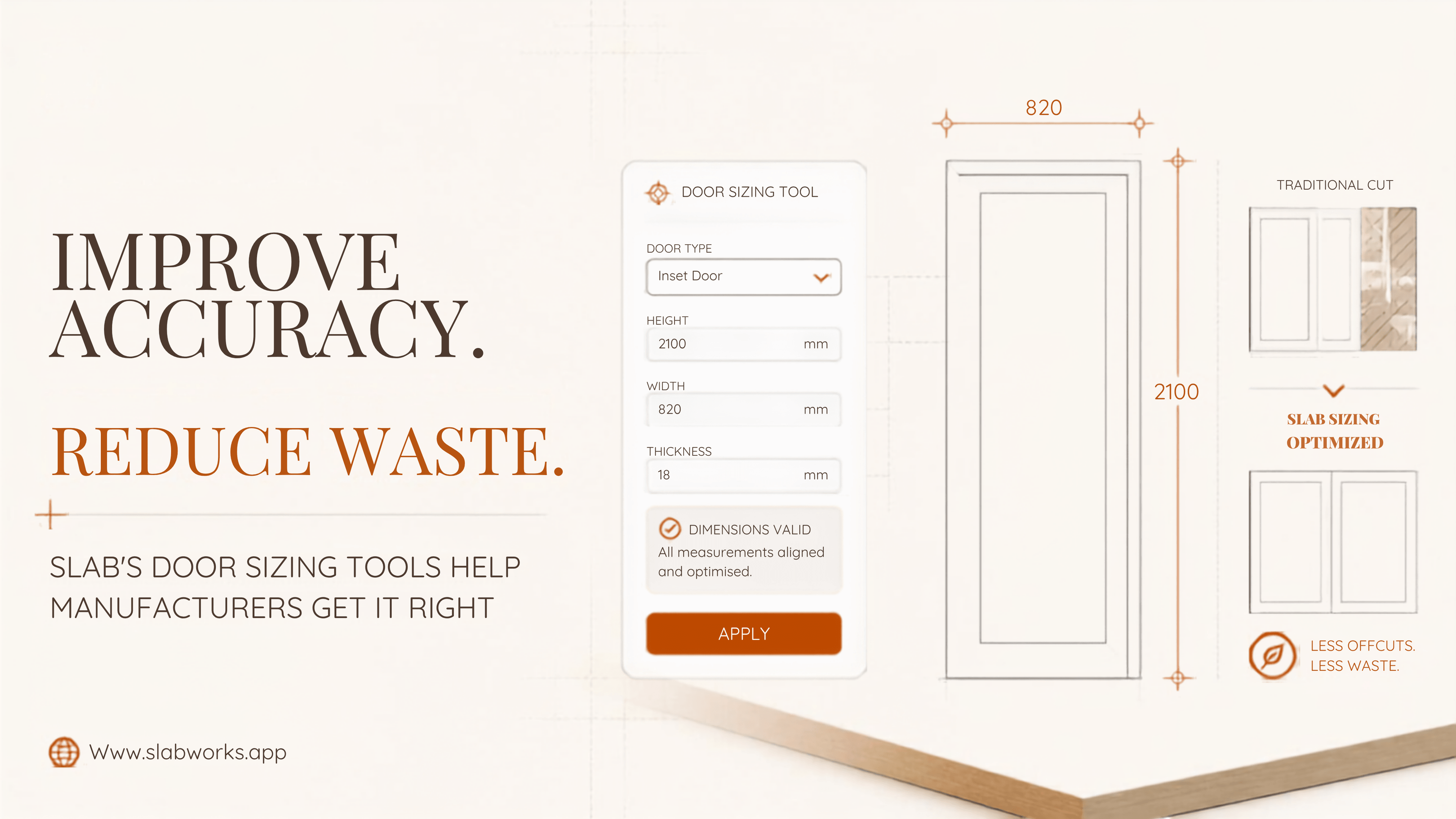
SLAB improves sizing accuracy by capturing measurements, materials, and hardware directly from the shop’s configured catalog during quoting, and then locking the final specification at the approval stage, ensuring the production team builds from the exact version quoted.
Where Sizing Errors Actually Come From
A custom door specification has to travel accurately through several hands before it becomes a finished product. The customer describes what they want, an estimator translates it into a quote, and the shop floor builds from whatever version of that specification reaches them.
Every step in that chain of process is a place where something can go wrong. A measurement written on paper and photographed for the back office introduces a transcription risk before pricing even happens. A cut list that arrives as a printout leaves a machinist interpreting rather than working from an unambiguous spec. And when a job's details change after the original quote but the shop floor is still working from an earlier printout, the result is a door built from last week's version of the order, which shows up as wasted material and a delayed delivery.
How Catalog-Based Configuration Prevents Errors at the Source
Rather than an estimator typing a size, handling, core, finish, and hardware combination from notes or memory, SLAB has these selected from a catalog the shop determines itself. It ships with a starting library of common options, which a shop then edits until it matches how it actually quotes. The meaningful difference is that selecting a value from a defined set removes the transcription step entirely. There’s no written note to misread and no measurement that changes each time someone retypes it.
How Locking a Quote Protects Accuracy Through Production

With SLAB, once a quote is approved, it locks against further sales edits. That single mechanic is what prevents the “built from last week’s quote” problem. If something does need to change after approval, it goes through the same review process. Every change is logged with who made it and when, so there’s never ambiguity about which version of a job is current.
How This Reduces Material Waste Specifically
Wrong-size or wrong-finish doors cost more than the materials used to remake them. They also add labor, scrap, and delivery delays. Shops using SLAB have seen production errors fall by 42%, driven by fewer transcription errors during quoting and locked specifications that prevent outdated information from reaching production. Catching errors at the source reduces the waste that follows.
Frequently Asked Questions
-
Does SLAB use a physical scanner or measuring device to capture door sizes? No. Accuracy comes from selecting measurements and specifications from the shop's own configured catalog, combined with locking that specification at approval.
-
What if our exact door size or configuration isn't in the standard catalog? The catalog is fully configurable. A shop edits the starting library to match its own sizes, materials, and pricing rules, and the Custom plan supports building out custom option libraries for shops with more specialized configurations.
-
Can a locked quote ever be changed? Yes, but changes go through the same review and approval process as the original quote, so the shop floor is never working from a change nobody actually signed off on.
-
Does this eliminate all sizing errors? It eliminates the errors introduced by manual transcription and by the shop floor building from an outdated version of a job. It doesn't replace the need for an accurate initial measurement from the customer or estimator. SLAB protects that measurement once it's captured, rather than capturing it in the first place.