Software5 min read
What Is Door Manufacturing Software and How Does It Work?
Door manufacturing software runs quoting, orders, production, materials and delivery for custom door shops — keeping a job's specification consistent from the first inquiry to the door that ships.
Slab Team · 15 October 2026
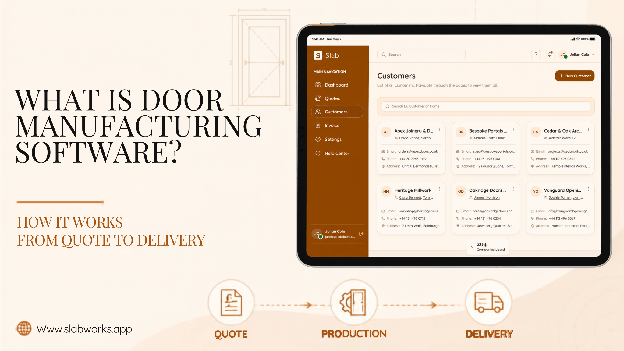
Door manufacturing software is a category of business software built to run the operations of custom and made-to-order door manufacturers (such as quoting, order management, production tracking, materials, and delivery) in place of the spreadsheets, paper, email, and general-purpose tools most shops start out using. It works by keeping a job's specification consistent as it moves from a customer inquiry through production and out the door, so the version being built on the shop floor is always the version that was actually quoted and approved.
What Does Door Manufacturing Software Actually Do?
At its core, this category of software covers five functions that custom door manufacturers need in some form, whether they're handled by dedicated software or put together manually:
- Quoting and estimating. Turning a customer's order (size, material, finish, hardware) into an accurate price, ideally by pulling from configured pricing rules rather than calculating each job from scratch.
- Customer and order management. Keeping contact information, project history, and order details attached to a job, so a quote, once approved, becomes the order without anyone re-entering the details.
- Production tracking. Visibility into what stage a job is in (cutting, assembly, finishing) and what's blocking it, without relying on a whiteboard or a phone call to the floor.
- Materials and inventory. Knowing what's on hand versus what's committed to active orders, so a shortage is visible before it stops a job mid-build.
- Invoicing. Generating a bill from the completed order, rather than rebuilding it separately from the original quote.
Not every tool in this category covers all five equally well. Some are quoting-focused, others lean toward production, and a smaller number connect the full path from quote to delivery.
How Is It Different From General Manufacturing Software or a Traditional ERP?
Traditional Enterprise Resource Planning (ERP) systems are built to manage an entire organization's workflow — finance, HR, supply chain, and manufacturing together. That makes them powerful for large, multi-division companies, and expensive and slow to implement for smaller ones, commonly running $50,000 to $1,000,000+ in setup costs and months of configuration.
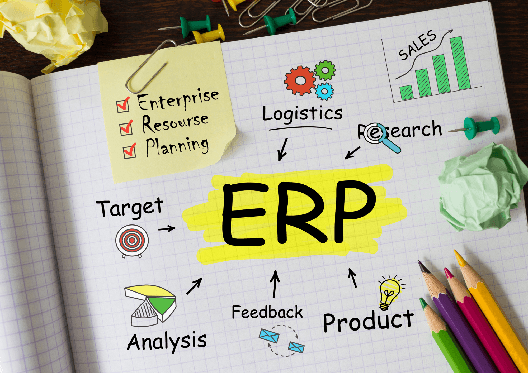
Door manufacturing software, by contrast, is usually scoped specifically to a door manufacturing workflow and its industry. That matters because custom doors don't fit a standardized product model. A door is never a "one fixed SKU" but a combination of size, handing, core, finish, and hardware that changes on nearly every order. Software built specifically for that variability handles quoting and specification differently from a generic manufacturing platform designed around repeat production of identical items.
How Does the Workflow Typically Move Through the Software?
Most door manufacturing software follows the same general shape: a quote is built from configured options, submitted for approval, and once approved becomes an order that is carried into production. From there, the job moves through build and finishing stages before shipping. The details of how that's structured vary by platform, but the underlying idea is consistent: a job's specification should travel with it, rather than being re-created at each stage.
Who Uses Door Manufacturing Software?
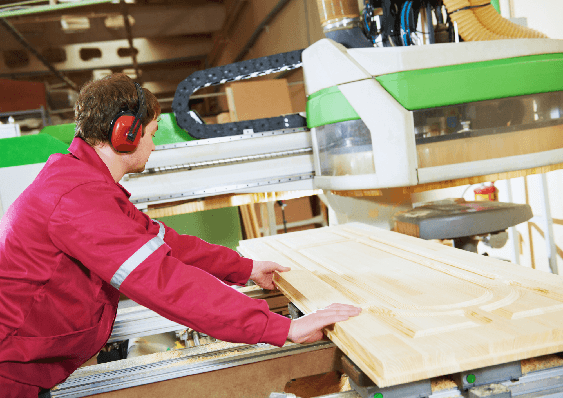
Manufacturers producing custom or semi-custom doors — exterior and interior, in materials like wood, fiberglass, and steel, in configurations ranging from standard single doors to sidelights, transoms, sliders, and barn or pocket doors. It's most useful for shops where no two orders are quite identical, which is exactly the condition that makes generic, catalog-based retail software a poor fit.
Where a Platform Like SLAB Fits
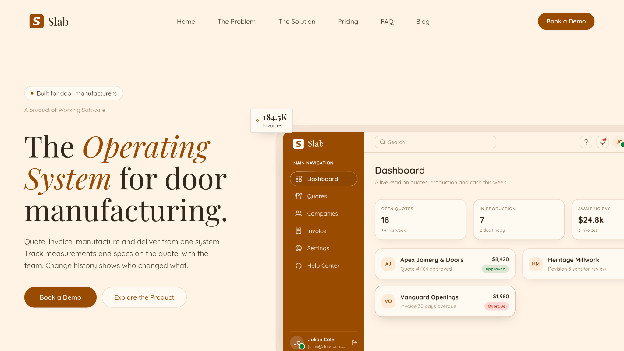
SLAB is one example of software built specifically for this category, connecting quoting, customer records, production, and inventory into one system built around the door manufacturing workflow rather than adapted from a general-purpose platform. It's not the only way to approach the category, but it illustrates the shape purpose-built door manufacturing software tends to take: one connected record for a job, rather than several disconnected tools each covering a piece of it.
Frequently Asked Questions
-
Is door manufacturing software the same as an ERP? Not typically. Door manufacturing software is usually scoped to the manufacturing workflow itself (quoting, orders, production, inventory). A traditional ERP covers an entire organization's finance, HR, and supply chain operations.
-
Does this category replace spreadsheets and QuickBooks entirely? It's built to replace the manual re-entry that happens between spreadsheets, paper, and general accounting software. Most shops still use accounting software for broader financial functions beyond the manufacturing workflow itself.
-
How much does door manufacturing software typically cost? Pricing varies widely by scope. Purpose-built platforms aimed at small and mid-sized shops are often priced well below traditional ERP implementations, which commonly run tens of thousands of dollars in setup alone.
-
Do I need this kind of software if my shop is small? The need usually tracks order variability more than shop size. A small shop building highly custom, one-off orders can hit the same quoting and tracking bottlenecks as a larger one running a more standardized process.