Software4 min read
Generic ERP vs Door Manufacturing Software: What's the Difference?
A generic ERP runs a whole enterprise; door manufacturing software is scoped to the custom door workflow. The difference shows up in cost, implementation time, and how each handles a door that changes on every order.
Slab Team · 3 December 2026
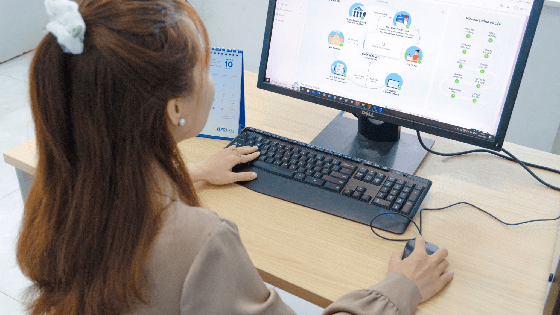
Door manufacturing software vs ERP? The core difference is scope. A generic ERP manages an entire enterprise's operations (finance, HR, supply chain, and manufacturing together), while door manufacturing software is scoped specifically to the custom door workflow: quoting, orders, production, and inventory.
Neither is inherently better than the other, because they're built to solve different problems. That difference shows up directly in cost, implementation time, and how well each handles the particular unpredictability of custom door specifications.
What a Generic ERP Is Built For
Enterprise Resource Planning software earned its name by design. It's meant to unify everything happening across a large organization into one system of record. For a multi-division manufacturer with dedicated IT staff and complex cross-department dependencies, an ERP makes sense. Most generic ERPs are also built on an implicit assumption that production is largely standardized — a defined set of SKUs manufactured repeatedly, rather than reconfigured on nearly every order.
Where Generic ERPs Struggle With Custom Door Work
The fixed-SKU model is a poor fit for custom door manufacturing. Each door can vary by size, handing, core, finish, and hardware, forcing traditional ERPs to be heavily customized. That can mean over $50K in setup fees, $4K–$6K per month, and months of implementation — costs that are often difficult for small and mid-sized shops to justify.
What Door Manufacturing Software Is Built For Instead
Software tailored specifically to this workflow starts from the opposite assumption: that every order is likely to be at least somewhat custom, and that quoting, production, and inventory need to be built around configurable options rather than fixed products. Because the scope is narrower, implementation is typically measured in days or weeks rather than months, and pricing tends to sit in a completely different category — often well under what a single month of a traditional ERP's ongoing costs would run.
The Real Trade-off
A full ERP can still be the right choice for larger manufacturers with multiple facilities, complex financial structures, or enterprise-level supply chain integrations. For smaller and mid-sized shops, however, a specialized platform may offer a better fit without introducing complexity the business doesn't need.
The key question is where the business's complexity actually comes from. If it lies in the manufacturing workflow, specialized door manufacturing software is likely the better fit. If it comes from broader organizational needs, such as multiple divisions or complex financial operations, a full ERP may justify the added cost and complexity.
Where This Leaves You
When a generic ERP is the default recommendation, most small and mid-sized custom door manufacturers are being sold more software than their problem requires. The complexity that's genuinely hard to manage in this industry — configurable quoting, production tracking, and material visibility — lives in the workflow, not the enterprise. Software built specifically for that workflow tends to solve it more directly, be faster to implement, and come at a cost that doesn't require a board-level sign-off to try.