Accuracy4 min read
How Software Helps Door Companies Avoid Costly Measurement Errors
Measurement errors rarely come from carelessness. They come from a specification passing through more hands than it needs to — and every handoff removed is one less chance for an 8¾ to become an 8⅝.
Slab Team · 10 December 2026
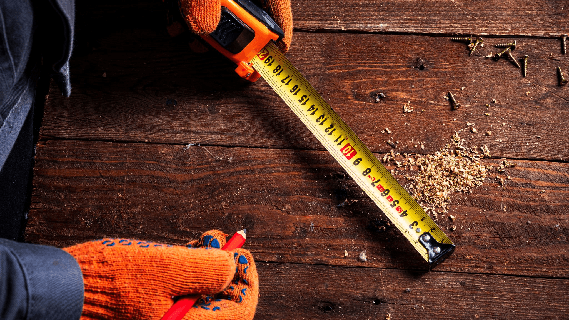
Software helps door manufacturers avoid measurement errors by removing the handoffs where a specification typically gets miscommunicated. A measurement is selected once, from a defined set of configured options, and then locked in place through production — instead of being written down, photographed, and retyped by a different person at every stage of the job.
What a Measurement Error Actually Costs
A wrong size or a mismatched configuration might not look like it would cost much. The obvious expense is the wasted material and labor that went into building the wrong thing. The less obvious cost is everything that happens afterward: the job has to be rebuilt, which pushes back a delivery date that was already communicated to a customer, and someone has to have the conversation explaining why.
The material and the time get paid for twice — once for the wrong version, and again for the correct one — and the delay and the difficult customer conversation come with the mistake, whether the shop wants them or not.
Where These Errors Originate
Measurement errors rarely come from someone being careless. They come from a specification traveling through more hands than it needs to. A customer describes what they want; an estimator or salesperson records it, often on paper, sometimes as a photo of that paper sent by email; and the shop floor eventually works from a cut list interpreted from whatever version of the specification made it that far. Every one of those handoffs is a place where an "8 and 3/4 inch" can quietly become an "8 and 5/8," and the further the error travels before it's caught, the more expensive it gets to fix.
The worst case is a job built from a specification that changed after the original quote — when a customer's revision reaches sales, but the shop floor is still building from the earlier printout.
How Software Closes Each Gap
What software offers here is the removal of the writing-down step in the places it causes the most damage. When size, handing, core, finish, and hardware are selected from a shop's own configured catalog rather than entered freehand, there's no handwriting to misread and no value that shifts each time someone retypes it.
When a quote locks once it's approved, the shop floor is guaranteed to be working from the same version that was actually signed off — not an earlier draft, and not a change that was communicated verbally but never made it into the system. And when every edit and stage change is logged automatically, there's no ambiguity about which version of a job is current, because the system itself is the record.
None of this requires a measuring device or new hardware on the shop floor. It requires the specification to stop being copied by hand at every stage where an error could quietly slip in.
What This Means for Your Shop
The cost of a measurement error is rarely visible as a single line item. It's absorbed into rework, delayed deliveries, and the time spent managing a frustrated customer, which makes it easy to underestimate how often it's actually happening. The most direct way to reduce measurement errors is to reduce the number of times a specification has to be copied by a human between the customer's original description and the door that actually gets built. Every handoff removed is one less chance for the mistake to happen in the first place.