Workflow5 min read
Door Manufacturing Workflow: From Quote to Production to Delivery
Quoting, order confirmation, production, quality control, delivery: each stage depends on the one before it, so how a shop manages the handoffs matters as much as how it handles any single stage.
Slab Team · 22 October 2026
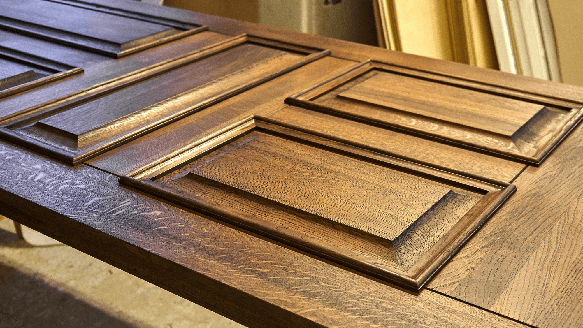
A door manufacturing workflow typically involves five stages: quoting and estimating, order confirmation, production, quality control, and shipping and delivery. Each stage depends on information from the one before it, and a wrong or outdated detail at any point tends to surface as a mistake several stages later — which is why the way a shop manages handoffs between stages matters as much as how it handles any single one.
Stage 1: Quoting and Estimating
Every job starts with translating a customer's request into a price. This is where custom manufacturing diverges from standardized production. There's no fixed catalog price to look up, because the combination being quoted may not have been built in exactly that configuration before. Shops without a system for this tend to price every job from scratch, which is slow and inconsistent. Shops with defined pricing rules or a configured catalog can turn a quote around faster without sacrificing accuracy on jobs that genuinely are unique.
Stage 2: Order Confirmation
Once a customer accepts a quote, it needs to become something the shop floor can actually build from. This is a more meaningful step than it sounds. It's the point where a proposal turns into a commitment, and where the specification gets locked in place. Shops that skip a clear confirmation step often run into a specific problem later: a customer's change request reaches sales but not production, and the two ends of the business end up working from different versions of the same order.
Stage 3: Production
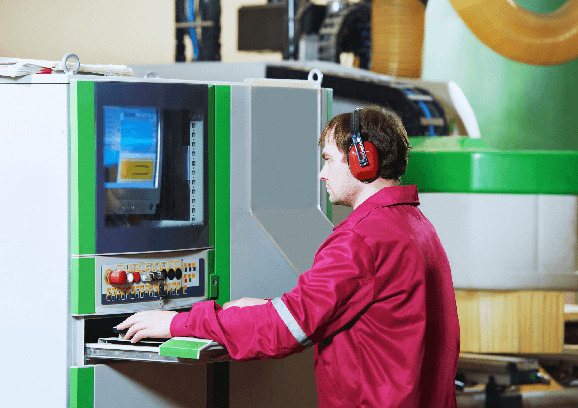
This is where the door gets built — cutting, assembly, and finishing — in whatever sequence a shop's process requires. Production runs on the confirmed order specification it's handed, which means the accuracy of everything upstream determines how smoothly this stage goes. A shop floor working from a printed cut list has to interpret that specification by hand; a shop floor working from a system that reflects the confirmed order directly has less room for that interpretation to introduce error.
Stage 4: Quality Control
Before a finished door ships, it needs to be checked against what was actually ordered — not just checked for build quality in the abstract. This stage catches the two most common and costly mistakes in custom manufacturing: a door built to the wrong specification, and a door built from an outdated version of the order that changed after production started. Catching either at this stage is inconvenient. Catching it after delivery is expensive.
Stage 5: Shipping and Delivery
The workflow doesn't end when a door leaves the building, even though this is where many shops' tracking effectively stops. Once a product is in transit, the natural questions are: what shipped, what's arrived, what's still on a truck. Shops that treat delivery as outside their tracking responsibility tend to find out about a problem when a customer calls asking where their order is, rather than knowing beforehand.
How Software Changes This Workflow
The workflow itself doesn't change much between a manual shop and one running dedicated software. The five stages above are largely the same either way. What changes is how information survives the handoffs between them. In a manual process, each stage transition is a re-entry point: the quote gets retyped into a work order, the work order gets interpreted into a cut list, the completed job gets manually reconciled into an invoice. Software built around this workflow — platforms like SLAB, among others in this category — is built specifically to remove those re-entry points, carrying a job's specification forward automatically instead of requiring someone to recreate it at each stage.
Frequently Asked Questions
-
Do all five stages take the same amount of time? No. Quoting and production typically take the longest and vary the most by job complexity, while order confirmation and quality control are usually shorter, more procedural steps that still matter disproportionately when skipped.
-
What's the most common point where this workflow breaks down? The handoff between order confirmation and production is the most common failure point, because it's where a specification has to travel from sales to the shop floor — often the largest organizational gap in a manufacturing business.
-
Does quality control happen only at the end? Formal quality control typically happens right before shipping, but many shops also check specifications at intermediate points during production, particularly after cutting and before finishing.
-
Why does delivery tracking matter if the door is already built correctly? A correctly built door that a customer can't get a status update on still creates the same frustration as a manufacturing error. From the customer's side, "I don't know where my order is" is a service failure regardless of build quality.