Automation5 min read
How Can Door Manufacturers Reduce Manual Work? 7 Processes to Automate
Quoting, spec transfer, approvals, scheduling, inventory, invoicing and delivery: seven processes where information that already exists gets re-created by hand — and where automation pays back first.
Slab Team · 29 October 2026
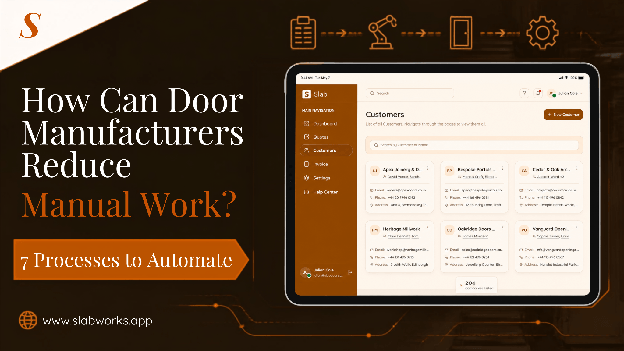
Door manufacturers can reduce manual work by automating seven key processes: quoting, transferring specifications to production, approving orders and managing versions, scheduling production, tracking materials and inventory, invoicing, and delivery monitoring. These steps often involve manual re-entry, explanation, or verification, making them common sources of delays and errors, since they rely on human oversight rather than automated systems.
1. Quoting and Estimating
Manual quoting means rebuilding a price from scratch for every job — checking material costs, calculating labor, applying margin, often from memory or a spreadsheet formula nobody fully trusts anymore. Automating this doesn't mean removing judgment from pricing; it means pulling information from prior pricing, which cuts turnaround time without sacrificing accuracy on jobs that are custom.
2. Specification Transfer to the Shop Floor
A specification that travels from a quote to a cut list via a printout, a phone call, or a handwritten note has multiple chances to go wrong before production even starts. Automating this means the shop floor works directly from the confirmed order's data, not someone's interpretation of it.
3. Order Approval and Version Control
Without a defined approval step, a customer's change request can update one copy of an order without updating every copy. Automating approval means a quote locks once it's confirmed, and any further change goes through the same review process rather than a silent edit — closing the gap where sales and production end up working from different versions of the same job.
4. Production Scheduling and Cut Lists
Scheduling by memory works until the person holding that information is unavailable. Automating this means cut lists and floor schedules generate directly from a job's confirmed specification, so the sequence of what's being built next doesn't depend on one person's recall.
5. Material and Inventory Tracking
Manual inventory tracking is either a count that's outdated the moment it's taken, or a habit of over-ordering as insurance against running short. Automating this means material status reflects what's actually committed to active orders, so a shortage shows up as a visible flag rather than a surprise discovered mid-build.
6. Invoicing
Rebuilding an invoice from a quote that was already itemized weeks earlier is redundant work with real cost. It delays billing, and delayed billing delays payment. Automating invoicing means generating the bill directly from the completed order — sometimes tied to production stages rather than issued as a single lump sum at the end.
7. Delivery and Shipment Tracking
Once a door leaves the shop, tracking commonly reverts to whatever a business was using before it had a system at all — a notebook, a driver's memory, an after-the-fact note. Automating this closes the last gap in the workflow, so a status question no longer requires someone to physically find out where a shipment is.
Why These Seven, Specifically
Each of these processes shares the same underlying pattern: information that already exists gets manually re-created somewhere downstream. None of them require replacing human judgment. A person still decides pricing rules, approves a quote, and signs off on quality. What changes is that the data behind those decisions doesn't have to be retyped, reinterpreted, or rediscovered at every stage a job passes through.
Platforms built specifically for door manufacturing, like SLAB, are generally built around automating this exact set of seven, connecting them into one system rather than requiring seven separate fixes.

Frequently Asked Questions
-
Should a shop automate all seven at once, or start with one? Most shops see the fastest return starting with whichever process is currently costing the most time — often quoting or specification transfer — and expanding from there, rather than attempting a full changeover at once.
-
Does automating quoting mean losing pricing flexibility? No. Automated quoting typically applies rules a shop configures itself, so pricing logic still reflects the business's actual judgment, just applied consistently instead of recalculated by hand each time.
-
Is inventory automation only useful for shops with high material volume? It matters most wherever material shortages currently cause production delays, regardless of overall volume. A smaller shop with tight margins can be affected by an undetected shortage just as much as a larger one.
-
How long does it typically take to see results from automating these processes? Processes like quoting and specification transfer tend to show time savings almost immediately, since they're largely mechanical changes, while broader cost reductions from fewer errors and less rework accumulate over a longer period.